Built where two mighty rivers – the Stour and the Orwell – meet at at the sea, Harwich is home to former naval yards and acres of wildlife-rich marshland. When Elizabeth I visited the town in 1561, she declared it: “a pretty place and wants for nothing.” The train journey there is an adventure in itself and is billed as the “Mayflower Line”, after the famous boat that sailed for America in 1620. The Mayflower’s master, Christopher Jones, was from Harwich. The railway line from Manningtree to Harwich carries visitors along the beautiful Stour Estuary, which you can also explore on foot, following part of the Essex Way.
Harwich
Essex


1. An hour or so by train - centuries of history
Visitors coming from London to Harwich will need to change at Manningtree, but the eighty-minute journey from capital to coast is packed with interest. The Mayflower Line is one of Britain’s scenic railways.
- Heading eastwards on the train, you pass the 2012 Olympic stadium on your left, with the UK’s tallest sculpture, the ArcelorMittal Orbit, looking like a roller coaster, beside it. There’s more about this area in our guide to car-free Greenwich, Woolwich and Docklands.
- At Colchester, look right for glimpses of Britain’s oldest recorded Roman town. You’ll see the tall tower of the town hall, and the late Victorian water tower nicknamed “Jumbo” silhouetted on the horizon.
- There’s often a quick change to platform 1 at Manningtree; once you’ve found the Harwich train, settle yourself on the left hand side to enjoy views of the Stour. Look out for the lovely church, twin ochre towers, and brick malt factory at waterside Mistley.
- The journey from here is spectacular, with views across the wide waters of the estuary to impressive buildings in Suffolk, like the Queen Anne-style Royal Hospital School. And, closer at hand, a series of waterside nature reserves, encompassing woods and flowering marshes.
- The industrial docks of Harwich International bring the journey abruptly back to the 21st century, but Harwich Town has plenty of history to explore – as well as pubs and teashops.
2. Stroll around town
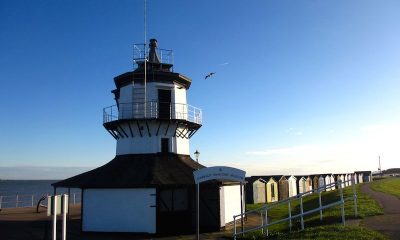
Step out of Harwich Town station into Old Harwich and explore on foot: a simple stroll of not much more than a mile takes you past centuries of seafaring history. You’ll see the 90-foot High Lighthouse ahead, built in 1818, now the official start of the long distance Essex Way.
- Turn left in front of the lighthouse and follow the road right to see a bit more of the old town. Turn left along Church Street, passing St Nicholas church, with its seafaring monuments, and the Guildhall, which contains an old prison cell, its wooden walls etched with ships, gallows and even an 18th-century hot air balloon (open Monday, Wednesday and Friday mornings).
- Turn right into Market Street and left into Kings Head Street, where half-timbered houses include (at number 21) the former home of Christopher Jones, captain of the Mayflower. There is a project locally planning to reconstruct the ship. At end of road, turn R along the Quay to find the Ha’penny Pier, lightship, and former naval yard, all overlooking the harbour. You can even get a ferry across to the Shotley peninsula.
- Follow the road right into Kings Quay Street. Head left and immediately right into Wellington Street passing murals and the 1911 Electric Palace Cinema. Turn left into Angelgate to see the Lifeboat Museum and walk along the waterfront to the Treadwheel Crane – a rare 17th-century naval relic.
- Continue, past the Low Lighthouse, housing a seasonal Maritime Museum and seaside gardens.
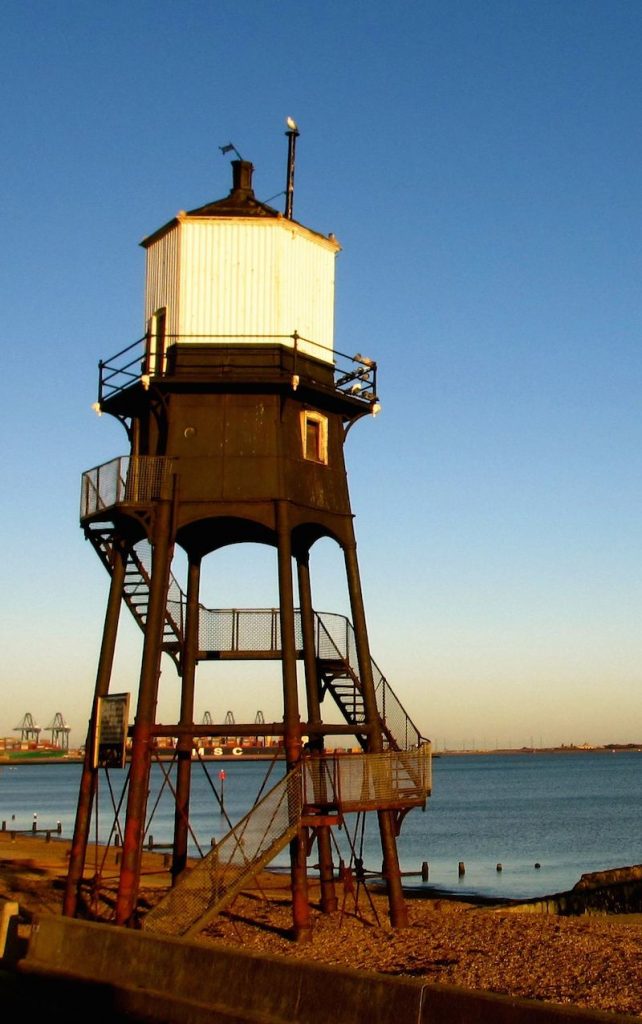
- Walk on along the sea front, with the water on your left, around the edge of the derelict Beacon hillfort, with views across bay. You can walk further along the coast to see the elegant Dovercourt lighthouses, or turn right instead at the marble statue of Queen Victoria into Kingsway and right again into High Street, bearing left into Main Road.
- Detour down the signed track to look at the Redoubt, a large circular fort built in 1808 to protect the harbour from a Napoleonic invasion (open summer and Sundays). Continue up main road back to the High Lighthouse.
- Returning to Harwich Town station, you might like to pop into the brewery there to pick up some souvenirs (cash only – phone ahead on 01255 551155 if you want to make sure someone will be there).

3. Walk the Essex Way
The 80-mile Essex Way crosses the county from Harwich to Epping, taking in ancient woods and thatched villages, open fields and winding valleys. To sample one of the routes highlights, the beautiful Stour estuary, take the train to Wrabness.
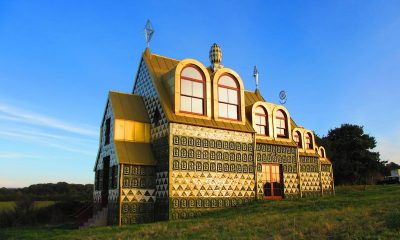
- Head downhill from Wrabness station, past Grayson Perry’s gleaming House for Essex and turn left beside the water, following the Essex Way poppy waymarks.
- Reaching Mistley, gateway to Constable Country, there are swans, boats, towers and cafes to enjoy before catching a train home. The fancy Thorn Hotel and the cosy T-House on Mistley Quay, serve everything from Mersea rock oysters to giant fruit scones with jam and clotted cream.
- Really energetic ramblers could walk the full 16 miles from Harwich to Manningtree, continuing along the coastal section of the stroll in 2 above, past the two wrought iron Dovercourt lighthouses…
- From Harwich the route will lead you along the coast and then cross-country to reach the estuary near Copperas Wood nature reserve. You pass a windmill at Ramsey and some fabulous views.
4. Ride the bus to the beach
Buses from Harwich head to Clacton and Colchester, through a series of local villages. The bus station is directly outside Harwich Town railway station.
- Bus 104 run to Colchester a few times per day, taking a similar route to the train. Between Mistley and Manningtree, it goes along The Walls, a waterside road by the Stour Estuary.
- For Clacton-on-Sea, bus 3 leaves hourly (and every two hours on Sunday) and arrives on Pier Avenue 55 minutes later.
- A long stretch of gold sand, perfect for a family day out, Clacton has a classic Victorian pier and plenty of cafes and seaside amusements.